Plasterboard Jointing & Finishing Levels Explained (Levels 3, 4 & 5)
Plasterboard finishing levels determine what paint system and surface treatment your walls can take. Get the level wrong and you'll see every imperfection the moment light rakes across the wall. This guide covers what each plasterboard finishing level means, where each one belongs on a typical Queensland build, and what the jointing process actually involves from taping through to final sand.
Most disputes between plasterers and painters on Queensland sites trace back to one thing: nobody agreed upfront on what finish was expected. A Level 4 job handed to a painter expecting Level 5 under gloss paint is a problem that shows up long after the plasterer has packed up. Understanding the levels before work starts saves that conversation.
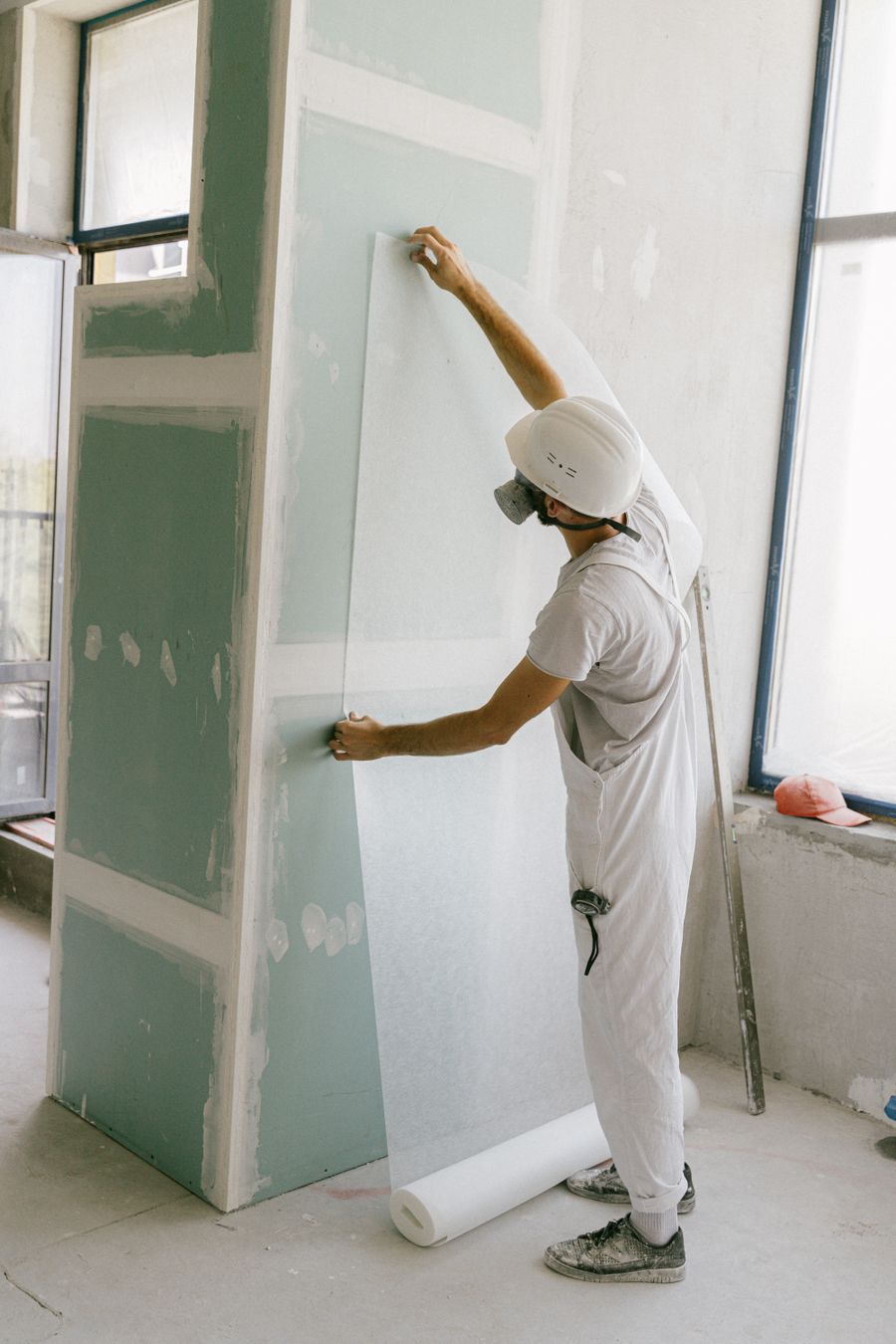
What the finishing levels actually mean
Plasterboard finishing levels in Australia align with the conventions set out in AS/NZS 2589, the standard covering gypsum lining application. The standard describes a progression from Level 0 (board fixed, nothing else done) through to Level 5 (skim coat applied over the full surface). Each level builds on the one before it.
Levels 0, 1, and 2 are for concealed areas or fire-rated assemblies where appearance is irrelevant. Levels 3, 4, and 5 are the ones that matter for any painted or finished surface a person will actually see. The types of plasterboard you select will also affect how joints behave, since recessed-edge boards are designed to take concealed jointing while square-edge boards are typically used where a cornice covers the joint.
Level 3: behind texture and heavy coatings
Level 3 is the minimum finish for any wall that will receive a heavy spray texture or a skip trowel finish. At this level, joints are taped and have a base coat of jointing compound applied over the tape and all fastener heads. One additional coat goes over that. The surface is lightly sanded or wiped, but tool marks and slight ridges are acceptable because they will be covered by the texture.
Where Level 3 belongs:
- Walls receiving a heavy hand or spray texture where the texture itself provides the surface
- Areas behind fixed cabinetry or joinery where the surface won't be seen
- Ceilings that will receive a heavy acoustic spray coating
Level 3 should not be used under flat emulsion paint or any light texture. The joint finishing is not complete enough to disappear under a flat coat, and you will see the joints and fastener heads once the paint dries.
- Surface will receive a heavy texture (skip trowel, knock-down, or spray)
- Wall is behind fixed cabinetry and won't be visible once installed
- Area is a utility or service space where appearance doesn't matter
Level 4: the standard for most Queensland residential walls
Level 4 is what most residential and commercial walls in Queensland receive, and it's the correct specification for flat or low-sheen paint, light stipple textures, and most standard paint systems. It builds on Level 3 by adding a third coat of jointing compound over joints and fastener heads, then sanding the entire surface smooth enough that no tool marks or ridges remain visible.
The sequence for a Level 4 finish:
- Apply jointing tape (paper tape embedded in base coat, or fibreglass mesh tape for cornice beads and corner angles)
- Base coat of compound over tape and all fasteners, feathered out wide
- Second coat after the base coat dries, feathered further
- Third coat (topping compound or all-purpose), feathered and blended
- Sand flat, wipe down, inspect under raking light before priming
For the jointing compounds, products like Knauf base coat compounds are used for the first coats where a harder, slower-drying material is appropriate, while a lighter topping compound is typically used for the final coat because it sands more easily and produces a finer surface. USG Boral and Knauf both supply comparable base coat and topping products used widely across SEQ.
You also need the right fixings & fasteners bedded correctly before jointing begins. Fastener heads sit just below the board surface without breaking the paper face. A fastener driven too deep tears the face and creates a weak point that telegraphs through every coat of compound applied over it.
- Flat, low-sheen, or semi-gloss paint on standard residential walls
- Light stipple or fine spray textures
- Most commercial office and retail fitouts
- Any surface not under critical or raking light
On the jointing compound side, choosing between a ready-mixed all-purpose compound and a setting-type compound matters. Ready-mixed compounds shrink slightly as they dry, so heavy fills done in one coat will crack. Setting compounds (powder mixed with water) harden by chemical reaction rather than drying, so they don't shrink, but they also don't sand as easily. Most experienced plasterers use a setting base coat for the first pass over taped joints and switch to a ready-mixed topping compound for the finishing coats.
Tools for Level 4 jointing
The basic kit is a 150mm and a 250mm broad knife, a corner tool or flexible corner angle, a hawk or mud pan, and a sanding block or pole sander. Automatic taping tools (banjos) speed up the tape application on large jobs. For the finishing coats, a 300mm or wider finishing blade is common because it feathers the compound across a wider band, making the joint less visible once painted.
Level 5: for gloss paint, critical lighting, and feature walls
Level 5 is the highest standard and involves everything in Level 4 plus a full skim coat applied over the entire board surface. The skim coat is a thin layer of finishing compound or purpose-made skim plaster spread across the complete face of the wall, not just over the joints. It fills the texture difference between the paper face of the board and the built-up compound over the joints, leaving a truly flat, continuous surface.
Level 5 is not a standard you apply everywhere. It's specified for:
- Walls receiving gloss or high-sheen paint, where any surface variation under a raking light source reads as a defect
- Feature walls with dramatic or directional lighting
- High-end residential finishes where the client expects a perfectly flat result
- Walls in commercial spaces where gloss sheens are used for hygiene or design reasons
The skim coat is usually applied as a single thin pass (1.5mm to 3mm is typical) with a wide finishing blade or a pool trowel. It requires a skilled hand because the entire face of the board is being worked at once, and any lap marks or trowel ridges will need further sanding. After the skim dries, the surface is finish-sanded with fine-grit paper, typically 120 grit or finer, then primed before painting.
The difference in material cost between Level 4 and Level 5 is relatively small. The difference in labour is significant. If you are specifying Level 5 on a project, make sure it's in the scope from the start, because adding a full skim coat after the plasterer has priced the job based on Level 4 will cost more than getting the spec right at quoting stage.
For more on how board thickness affects the surface you're finishing, see our earlier post on choosing plasterboard thickness.
Comparison table: Levels 3, 4, and 5
| Level | What's involved | Typical use | Paint/texture compatibility |
|---|---|---|---|
| Level 3 | Tape + base coat + one additional coat over joints and fasteners. Light sanding only. | Behind heavy textures, concealed areas, spray acoustic coatings | Heavy texture or spray only. Not for flat or low-sheen paint. |
| Level 4 | Tape + base coat + second coat + third (topping) coat. Full sanding to remove tool marks. | Standard residential walls and ceilings, commercial fitouts | Flat, low-sheen, semi-gloss, light texture. Not for gloss under critical lighting. |
| Level 5 | All of Level 4 plus a full skim coat over the entire board surface. Fine sand and prime. | Gloss paint, feature walls, high-end residential, directional or raking light | All paint sheens including gloss and high-gloss. |
Common mistakes on Queensland sites
Skipping the primer before painting
Even a well-executed Level 4 or Level 5 finish needs a plasterboard primer before the topcoat goes on. Bare jointing compound and the paper face of the board absorb paint at different rates. Without primer, the paint flashes unevenly across the surface and every joint shows up. A purpose-mixed PVA sealer or plasterboard primer seals the whole surface to a consistent porosity before painting begins.
Checking under raking light before declaring it done
The only reliable way to check a finished plasterboard wall before priming is to shine a work light at a low angle across the surface. Any hollow, ridge, or feather edge that needs another pass shows up clearly under raking light. Under flat overhead lighting, the same defects are invisible. Do this check after sanding and before the primer goes on, not after the wall is painted.
Applying compound in coats that are too thick
Each coat of jointing compound needs to be thin enough to dry without cracking. A thick first coat over tape will surface-dry while staying wet underneath, then crack as the moisture escapes later. Three thin coats, each feathered wider than the last, produce a better result than two heavy ones and dry more predictably in Queensland's climate, particularly in humid coastal areas where drying times are already extended.
Ordering the right compounds and materials
Bayside stocks jointing compounds and adhesives suited to each stage of the finishing process, from base coat compounds for the initial tape embed through to lightweight topping compounds for final coats and skim work. If you are specifying Level 5 on a project, ask about the finishing compounds that work with the board type you have on site, because not all topping products behave the same way over different board faces.
The full plasterboard range available from Bayside includes recessed-edge boards designed to take concealed Level 4 and Level 5 jointing, as well as square-edge options for applications where the joint is covered by a cornice or bulkhead detail. Choosing the right board edge profile for your finishing level makes the jointing work easier and produces a better result.
Stocking up for your next plasterboard job?
Bayside Plasterboard supplies board, jointing compounds, and fixings to builders and plasterers across Southeast Queensland. Tell us the finish level and board spec and we'll sort out what you need.
Talk to Bayside →