Most builders in Brisbane know that insulation matters. What catches people out is how much it matters in Queensland specifically. The state sits in one of the toughest thermal climates in Australia, with humid coastal summers, radiative heat loads through lightweight roofs, and temperature swings that push HVAC systems hard. Get the insulation wrong and your client ends up with a house that cooks in January and runs air conditioning around the clock. Get it right and the home performs well, passes its energy assessment, and actually feels comfortable to live in.
This post covers the insulation board products Brisbane builders are specifying in 2026, the R-values required under current regulations, and a few practical points that often get overlooked on site.
Why Queensland Homes Need the Right Insulation
Brisbane sits in Climate Zone 2 under the National Construction Code. That classification covers most of coastal Southeast Queensland, including Moreton Bay, Logan, Redland, and the Sunshine Coast hinterland. Zone 2 is defined as warm humid, which sounds mild but is not. Summer afternoon temperatures regularly reach 35 to 38 degrees Celsius, and relative humidity above 70% is common from November through March.
The heat load problem in Queensland is primarily radiant, not conductive. A metal roof sitting in full sun can reach 70 degrees Celsius on a December afternoon. Without the right ceiling insulation, that heat radiates directly into the living space. Walls face a similar issue when they get direct western sun exposure.
The NCC 2022 energy efficiency provisions tightened the minimum Nationwide House Energy Rating Scheme (NatHERS) score to 7 stars for new residential builds, up from 6 stars under the previous code. This change, which came into effect across Queensland on 1 May 2024, means builders can no longer get away with the bare minimum insulation spec and still pass. The ceiling and wall insulation selections now need to be deliberate, not an afterthought.
According to the Australian Building Codes Board, residential buildings account for around 25% of Australia's total energy use. NCC 2022 targets that figure directly by raising the performance floor.
Types of Insulation Board Used in Brisbane Builds
The term "insulation board" covers several different products. Here is what builders in SEQ are actually using and where each product fits.
Foil-Backed Plasterboard
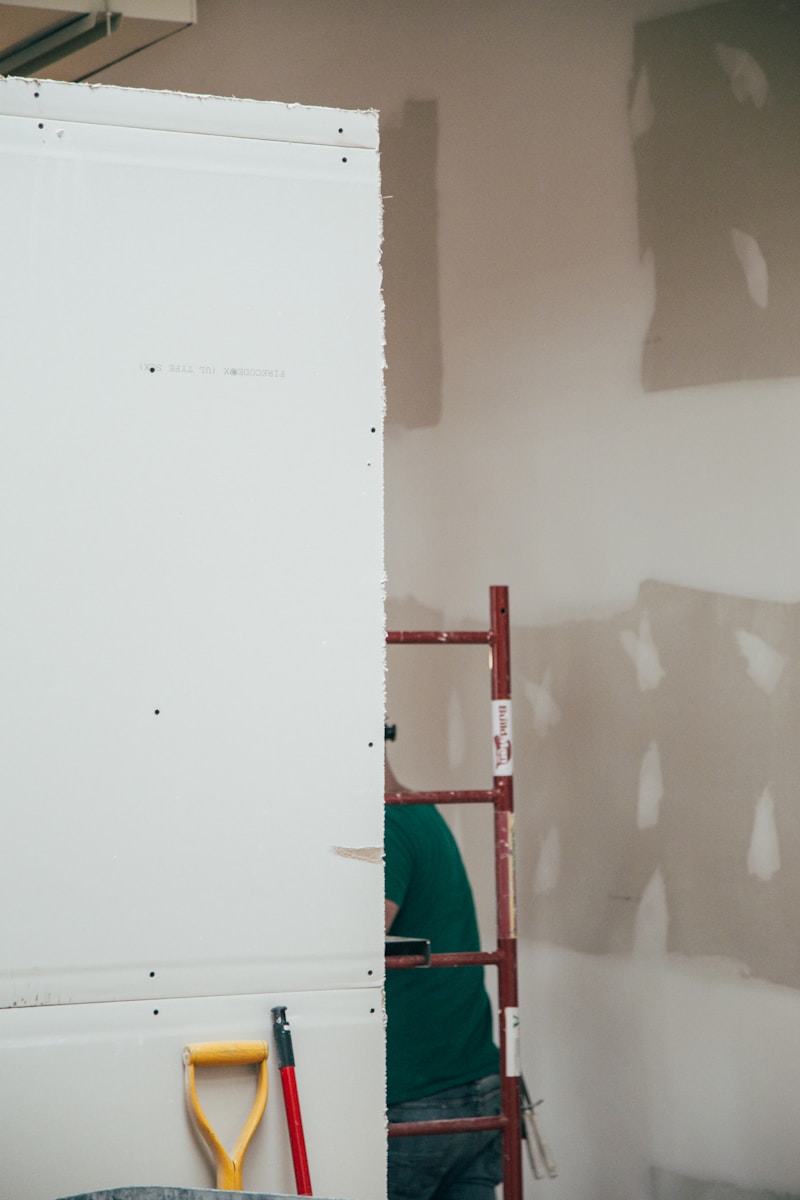
This is standard plasterboard with a laminated foil face bonded to the back. When installed with the foil side facing an enclosed air gap, it adds a reflective barrier that reduces radiant heat transfer. It is a popular choice for walls and ceilings in Queensland because it handles two jobs at once: it gives you your wall lining and your thermal reflective layer in a single sheet. The thermal performance depends on the air gap being intact, which means installation quality matters.
Foam-Core Insulation Boards
Rigid foam boards, typically expanded polystyrene (EPS) or extruded polystyrene (XPS), offer higher R-values per millimetre of thickness compared to glasswool. They are commonly used in slab edge insulation, in raked ceilings with limited depth, and under some roofing systems where batt depth is restricted. XPS has better moisture resistance than EPS and is preferred in applications where the board may be exposed to ground moisture.
Glasswool Batts vs Boards
Most builders know glasswool batts. They are flexible, widely available, and fit between standard stud spacings. Glasswool boards are the rigid version of the same material, compressed and faced for situations where batts would compress or slump. Boards are used in suspended ceilings, behind service panels, and in commercial applications, though they appear in residential work too, particularly for acoustic wall builds and party walls in duplex or townhouse construction. For standard residential ceiling and wall applications in Brisbane, batts remain the more common choice, but the board format suits specific situations where structural rigidity is needed.
Bayside Plasterboard stocks insulation products suitable for SEQ residential construction. The team can point you to the right spec for your build type and climate zone.
What R-Value Do You Need in SEQ?
R-value measures thermal resistance. The higher the number, the better the insulation resists heat flow. For Climate Zone 2 (Brisbane and most of SEQ), the YourHome technical manual and typical NatHERS assessors recommend the following minimum values as a starting point for a 7-star-compliant build. Note that a full NatHERS assessment will give you the specific requirement for your design.
| Location | Minimum R-value | Notes |
|---|---|---|
| Ceiling (roof space above) | R4.1 to R5.1 | Higher end preferred for metal roofs with full sun exposure |
| Walls (external) | R2.0 to R2.7 | Foil-backed board in cavity adds reflective benefit on top of bulk value |
| Under floor (suspended timber) | R1.5 to R2.5 | Often overlooked; relevant for older Queenslander-style frames |
These are working figures, not code-mandated minimums. Your NatHERS assessor will model the whole building and may need you to increase or adjust values depending on glazing area, roof colour, and orientation. Treat the table above as a starting brief, not the final spec.
- Ceiling: R4.1 minimum, R5.1 preferred for metal roofs
- External walls: R2.0 minimum, foil cavity adds reflective value
- Under floor (suspended): R1.5 to R2.5 depending on floor type
- NCC 2022 requires 7-star NatHERS for new residential builds
- Always confirm with your NatHERS assessor before purchasing
Moisture-Resistant Plasterboard in Wet Areas
Brisbane's humidity creates problems beyond the ceiling. Bathrooms and laundries in Queensland homes see sustained moisture exposure, particularly in older homes without adequate exhaust ventilation. Standard plasterboard breaks down under repeated wetting and drying cycles.
Moisture-resistant (MR) plasterboard, commonly called blue board for its distinctive facing paper, is specified for wet area walls and ceilings as standard practice. It uses a water-resistant core and treated face paper that resists swelling and mould growth better than standard board. It is not waterproof, which means it still needs proper tile adhesive and grout behind tiled surfaces, but it holds up far better than standard board in high-humidity conditions.
For laundries, the specification usually extends to all walls, not just the area immediately behind the trough or washing machine, because steam and splashing travel. Builders who cut corners here often see callbacks within two years when the wall surface starts to bubble or discolour.
Bayside Plasterboard's full plasterboard supply range includes standard, moisture-resistant, and fire-rated boards suitable for Brisbane residential and light commercial work.
Practical Tips from Brisbane Builders
The insulation spec on paper is only part of the story. These are the points that experienced Brisbane site supervisors flag repeatedly.
Ventilation still does a job, even with good insulation
Insulation slows heat transfer. It does not eliminate the need for a ventilated roof space. A sealed roof cavity with no air movement traps moisture and can create conditions for mould and timber degradation. Eave vents and ridge vents working together move air through the space and carry moisture out. Install the insulation, but do not block the airflow path.
Foil orientation is not optional
Reflective foil insulation works by reflecting radiant heat away from an air gap. The foil must face the air gap to do its job. Foil installed with the reflective side against the frame or flush against another surface loses most of its thermal benefit. On site, this is worth checking at installation, not after the ceiling is sheeted.
Do not block eave vents when installing insulation
When installing ceiling insulation batts, the batts at the perimeter often get pushed too far toward the eave and block the vent opening. This is one of the most common insulation installation errors in Queensland residential work. Keep the batt pulled back from the eave vent by at least 50mm, or use a vent baffle to maintain the air path. Blocked eave vents trap heat and moisture in the roof cavity and reduce the performance of the whole insulation system.
Check your foil product's vapour permeability
In Queensland's humid climate, some builders use vapour-permeable foil rather than fully impermeable foil in wall cavities. A fully sealed vapour barrier in a wall cavity can trap moisture that enters from the inside, which causes more problems than it solves in a warm humid climate. If you are unsure about the vapour management strategy for your build, get advice from your energy assessor before specifying the foil product.
Get the Right Insulation Products for Your Job
Bayside Plasterboard supplies insulation products and plasterboard to builders and tradies across Southeast Queensland. Discuss your NCC 2022 build or renovation spec with the team before you price the job.
Discuss Your Project with Bayside →