For a Brisbane ceiling retrofit, R2.5 to R4.0 batts are the common choice, with the higher end of that range preferred where the roof space allows it. Measure joist spacing before ordering so the batts friction fit, keep clearance around downlights and flues, and never compress a batt to make it fit, because compression cuts the R-value you paid for.
Most Brisbane homes built before the 2000s carry little or no ceiling insulation. A winter cold snap or a February heatwave makes the difference obvious, and a ceiling top-up is one of the highest value upgrades a renovator can make. It is also one of the few improvements where the material cost is modest and the effect is felt immediately.
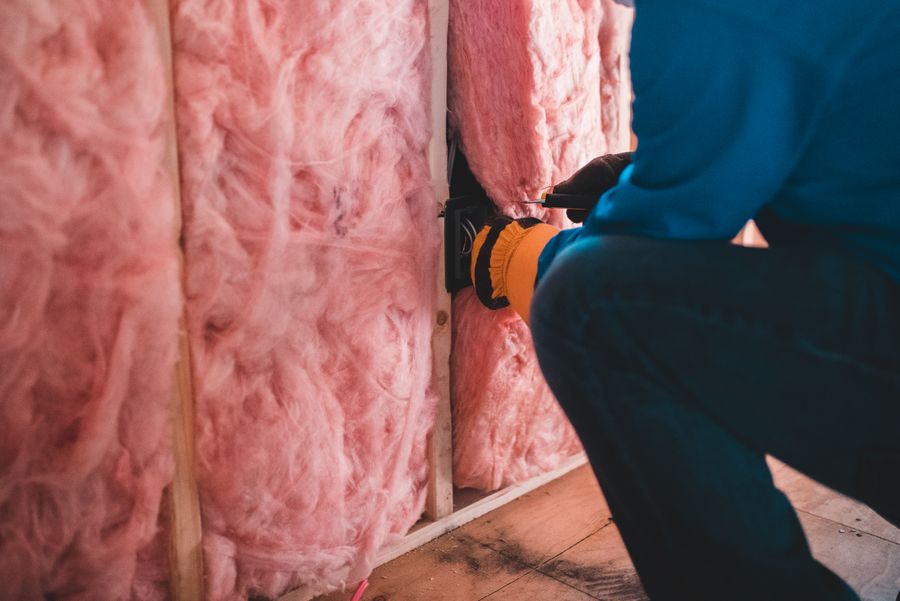
Why ceiling insulation matters most in this climate
In South East Queensland the dominant heat load comes down through the roof. A dark roof under summer sun radiates into the roof space, and without insulation at ceiling level that heat moves straight into the rooms below. The ceiling is the single largest surface exposed to that load, which is why it delivers more benefit per dollar than wall or floor insulation in most established homes here.
The winter case is smaller but real. Brisbane nights in July drop further than people expect, and an uninsulated ceiling loses heat upward all night. The same batts work in both directions, because insulation slows heat transfer rather than blocking it in one particular direction.
The practical consequence is on running cost. An air conditioner in an uninsulated house is fighting a load that never stops arriving. Insulate the ceiling and the same unit reaches temperature sooner and cycles less.
Choosing the right batts
For South East Queensland’s climate, Bradford Gold and Knauf Ceiling Batt products in the R2.5 to R4.0 range are the common retrofit choice for an existing roof space, and the ABCB energy efficiency provisions set the requirement for new work, as our guide to batts by R-value explains. Polyester batts are a popular option for confined roof spaces because they handle easily and do not itch.
R-value is a measure of thermal resistance, and higher means more resistance to heat flow. The reason retrofits often land lower than new build specifications is simply space: an existing roof space has whatever depth it has, and a higher R-value batt is a thicker batt. Forcing an R4.0 batt into a cavity that only suits R2.5 achieves nothing, because a compressed batt performs at roughly the R-value of its compressed thickness rather than its labelled one.
| Material | Handling | Best suited to |
|---|---|---|
| Glasswool | Compressed packs, expands on opening. Gloves and mask recommended. | The volume choice for most ceiling retrofits and new work |
| Polyester | No itch, no mask needed, holds its shape well | Tight or awkward roof spaces, owner-installers, allergy concerns |
| Acoustic grade batts | Denser than thermal equivalents at the same thickness | Between-floor and between-room applications, not just roof spaces |
Batt width is the other number to get right. Batts are made to suit common joist spacings so they friction fit between members without needing to be held. Ordering the wrong width means either cutting every batt or leaving gaps at the edges, and a gap is a thermal bypass that undoes a surprising amount of the benefit across a whole ceiling.
Retrofit practicalities
Measure joist spacing before ordering, keep clearances around downlights and flues, and do not compress batts to force a fit: compression cuts the actual R-value. If the ceiling itself is tired, replacing sagging sheets with fresh 10mm or 13mm plasterboard while the roof space is open saves doing the job twice.
A few more things worth settling before the batts arrive:
- Check what is already up there. Older homes sometimes have degraded or partial insulation. Old batts that are dry and intact can often be topped over, but anything damp, vermin affected or unidentifiable should come out first.
- Clearance around heat sources. Downlights, exhaust fans, flues and transformers all need the clearance their manufacturer specifies. Covering a fitting that requires clearance is a fire risk, and it is the single most important safety point in a ceiling retrofit.
- Do not block eave ventilation. Batts pushed hard into the eave line stop the roof space breathing, which traps moisture. Leave the ventilation path clear.
- Work off the joists. Ceiling lining will not carry a person. Boards laid across joists make the job safer and faster.
- Pick your time of day. A Brisbane roof space in the afternoon is genuinely dangerous in summer. Early morning is the window.
If the ceiling is coming down anyway, that changes the calculation considerably. Working from below with the joists exposed is faster, safer and produces a better result than crawling above, and it is the moment to fix anything else in the roof space while access is easy. Our post on insulation board for Queensland homes covers the wider product range if you are relining as well as insulating.
- Ceiling area in square metres, room by room
- Joist spacing, so the batt width friction fits
- Available depth in the roof space, which caps the R-value
- Number and type of downlights or flues needing clearance
- Whether existing insulation stays, gets topped, or comes out
Pick-up or delivery
Insulation is bulky, so most renovators have it delivered with their board order. We run our own trucks across Brisbane and deliver or hold for click and collect at all four branches.
The volume catches people out more than the weight. Insulation packs are compressed for transport but they take up serious space in a ute or trailer, and a whole house worth of ceiling batts will not fit in a vehicle that carried the board comfortably. Tell us the total area when you order and we will tell you honestly whether it is a pick-up or a delivery.
If the batts are going in before the ceiling is relined, sequencing matters too. Insulation stored on site needs to stay dry, so time the drop close to when it goes up rather than having it sit in a partly open roof space through a wet week. We hold stock across Morningside, Redlands, the Gold Coast and Caboolture and can stage the delivery around your program.
Need plasterboard, framing or insulation on site? Call the trade counter on (07) 3245 4488 or send an enquiry and the team will come back to you with stock and pricing.
Insulating a ceiling this season?
Give Bayside Plasterboard your ceiling area, joist spacing and available depth, and we will work out the batt type, R-value and quantity, then get it to site with your board order.
Talk to Bayside →